Easy Irish Soda Bread Recipe
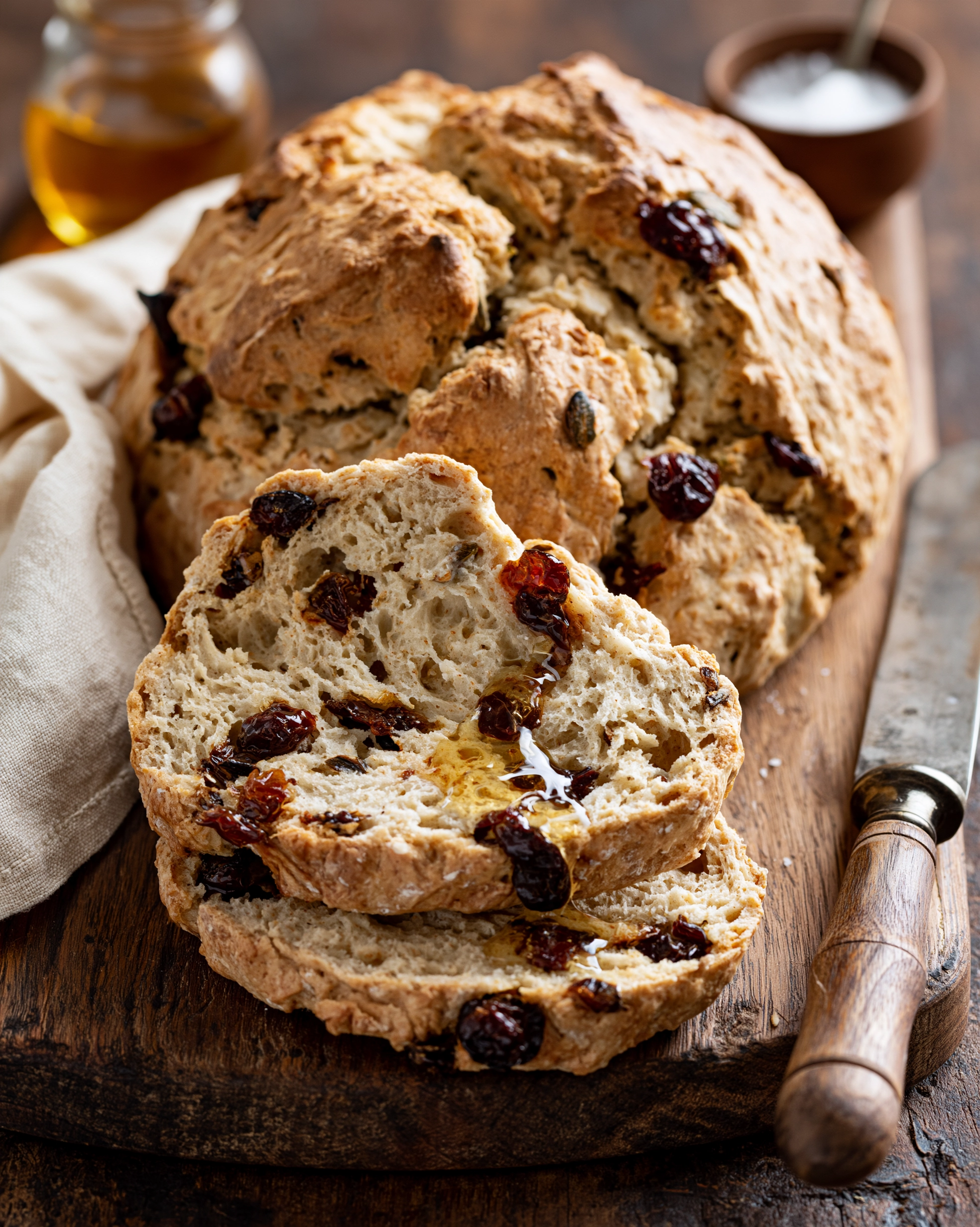
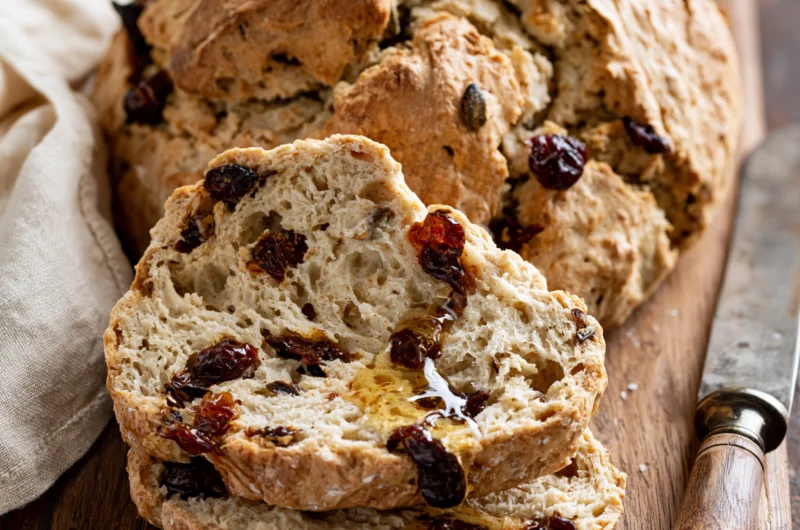
Warm bread on the table in about an hour, with no yeast, no rising, and no kneading marathon — that is the promise of a good Irish soda bread recipe, and this loaf keeps it. You get a rustic round with a deep cross cut into the top, a crust that bakes up crackly and deep golden, and a tender crumb absolutely studded with plump, sweet raisins, exactly like the loaf in the photo. A handful of pumpkin seeds speckled through the slices is the little touch that makes this version mine.
Soda bread works because of a simple bit of kitchen chemistry: baking soda meets tangy buttermilk and lifts the dough all on its own. The only rule is to be quick — mix, shape, cut the cross, and get it into a hot oven while the lift is still alive. Serve thick slices warm with salted butter and a drizzle of honey, the way the photo shows, and try to tell me this is not the best thing to come out of your oven all month.

Why This Loaf Belongs in Your Regular Rotation
- No yeast, no waiting — buttermilk and baking soda do the rising. Mixing bowl to oven in about 15 minutes.
- That crackly, golden crust — a hot oven and a deep cross cut give you the rustic, craggy top in the photo.
- Raisins in every bite — a full cup, dark and golden mixed, so every slice has those sweet, jammy pockets.
- Beginner-proof — if you can stir a bowl and shape a ball, you can bake this bread. There is nothing to proof and nothing to punch down.
- Breakfast, tea time, or soup night — it is wonderful toasted with butter in the morning and just as good next to a bowl of stew.
The Ingredients (Pantry Basics, One Special Loaf)
- 3 cups (375 g) all-purpose flour, plus more for dusting — the main structure of the loaf.
- 1 cup (125 g) whole wheat flour — this is what gives the crumb its warm, hearty tan color and gentle nutty flavor in the photo. All all-purpose works too; the loaf will just be paler.
- 2 tablespoons granulated sugar — soda bread with raisins leans a touch sweet, in the Irish-American bakery style. It also helps the crust brown.
- 1 teaspoon baking soda — the leavener. Make sure yours is fresh; old soda loses its lift and the loaf will be dense.
- 1 teaspoon fine salt — do not skip it; without salt this bread tastes flat and floury.
- 4 tablespoons (55 g) cold unsalted butter, cut into small cubes — rubbed into the flour like a scone dough, it keeps the crumb tender instead of bready-tough.
- 1 cup (150 g) raisins, a mix of dark and golden — just like the photo, where you can see both kinds glistening in the slices. Plump, soft raisins are best.
- 2 tablespoons pumpkin seeds — the little green-flecked seeds you can spot through the crumb in the photo. They add a gentle crunch and a pretty finish.
- 1 large egg — lightly beaten into the buttermilk; it enriches the crumb and helps the crust turn that deep golden brown.
- 1 1/2 cups (360 ml) cold buttermilk, plus a spoonful or two more if needed — the acid that wakes up the baking soda. Cold is fine; it goes straight from the fridge into the dough.
- Soft butter and honey, for serving — non-negotiable at my table, and exactly how the slices in the photo are served.
How to Make It: Mix, Shape, Cross, Bake
- Heat the oven properly hot. Preheat to 425°F (220°C). Line a baking sheet with parchment paper, or use a cast iron skillet if you have one — the heavy pan gives an extra-crisp bottom crust.
- Whisk the dry ingredients. In a large bowl, whisk together the all-purpose flour, whole wheat flour, sugar, baking soda, and salt until evenly combined.
- Rub in the butter. Add the cold butter cubes and work them in with your fingertips (or a pastry cutter) until the mixture looks like coarse crumbs with a few pea-sized pieces of butter left. Those little pieces are tenderness insurance.
- Add the good things. Stir in the raisins and pumpkin seeds and toss them through the flour mixture. Coating them in flour now keeps them from sinking to the bottom of the loaf as it bakes.
- Bring it together — gently. Whisk the egg into the cold buttermilk, pour it over the flour mixture, and stir with a fork or a wooden spoon just until a shaggy, soft dough forms with no dry flour left at the bottom. If it looks dry, add buttermilk a spoonful at a time. The dough should be soft and a little sticky, never stiff.
- Shape the round. Tip the dough onto a well-floured surface. With floured hands, knead it very briefly — 8 to 10 gentle turns, about 30 seconds, just until it holds together — then shape it into a round loaf about 7 to 8 inches across and 1 1/2 inches thick. Move it to your prepared pan. A light hand matters: soda bread gets tough if you treat it like yeast dough.
- Cut the cross. With a sharp knife, cut a deep cross into the top of the loaf, about 1/2 inch deep and reaching almost to the edges. This is not just tradition (the cross was said to bless the bread and let the fairies out) — it helps the thick center of the loaf bake through evenly, and it opens into the wide, craggy split you see in the photo.
- Bake hot, then steady. Bake at 425°F (220°C) for 15 minutes, then reduce the oven to 400°F (200°C) and bake 25 to 30 minutes more, until the crust is a deep golden brown all over.
- Test it the Irish way. Turn the loaf over and tap the bottom — it should sound hollow, like a drum. A thermometer slid into the center should read about 190°F (88°C). If the crust is browning too fast at any point, lay a loose sheet of foil over the top.
- Cool before you slice. Move the loaf to a wire rack and wait at least 20 to 30 minutes before cutting. The crumb is still setting as it cools; slice too early and the inside turns gummy. Then cut thick slices and serve warm with butter and honey.
Sofia’s Expert Tips (Crusty Outside, Tender Inside)
- Work fast once the buttermilk lands. The soda starts reacting with the buttermilk the second they meet, and those bubbles are your rise. Have your pan ready, your surface floured, and your oven fully preheated before you pour, then get the loaf baking without dawdling.
- Barely knead — this is the big one. Thirty seconds of gentle folding is plenty. Every extra turn develops gluten, and gluten is what turns soda bread from tender to tough and chewy. A slightly rough, shaggy look is exactly right.
- Fresh baking soda, always. Soda that has sat open in the cupboard for a year will not lift this loaf. If you are not sure of yours, drop a pinch in a spoonful of vinegar — it should fizz fiercely. No fizz, no rise, buy a new box.
- Flour your raisins. Tossing the raisins and seeds through the dry flour mixture first is a tiny step with a big payoff: they stay suspended through the whole loaf instead of sinking into a sad layer at the bottom.
- Cut the cross deeper than you think. A timid little score seals shut in the oven. Go a full 1/2 inch deep, nearly edge to edge — the loaf needs that opening to expand and to bake through its thick middle.
- The hollow tap never lies. Color can fool you on a rustic loaf like this. The tap test (hollow sound on the bottom) plus a deep golden crust is the reliable sign it is done through the center.
Easy Variations Worth Trying
- The plain classic: leave out the raisins, pumpkin seeds, and sugar for the traditional everyday loaf — flour, soda, salt, buttermilk, nothing else. It is the version made for dunking into soups and stews.
- Caraway seed bread: swap the pumpkin seeds for 1 to 2 teaspoons of caraway seeds for that old-fashioned flavor many Irish-American bakeries are known for.
- Tea-time loaf: use all dark raisins (or half currants), add the zest of one orange, and sprinkle the top with a teaspoon of coarse sugar before baking for a sparkly, sweet crust.
- Cheddar and herb: skip the raisins and sugar, and fold in 1 cup of shredded sharp cheddar and 2 tablespoons of chopped fresh chives or rosemary. Incredible warm next to a bowl of tomato or potato soup.
How to Store, Freeze and Reheat It
- Counter: soda bread is at its very best the day it is baked. Wrap the cooled loaf in a clean tea towel or foil and keep at room temperature for up to 2 days. The crust softens as it sits — that is normal.
- Bring it back to life: slices toast beautifully, which is my favorite way to eat day-two soda bread. Or warm the whole loaf in a 325°F (165°C) oven for about 10 minutes to crisp the crust again.
- Freezer: slice the loaf first, then freeze the slices in a sealed bag with parchment between them for up to 3 months. Toast straight from frozen — butter and honey on top, and it tastes freshly baked.
FAQs
Tradition says the cross blesses the loaf and lets the fairies escape so they do not curse your bread — but there is a practical reason too. This is a thick, dense-style loaf, and the deep cross opens up the center so heat can reach the middle. Without it, you risk a crust that is done while the very center stays doughy.
Make a stand-in: put 1 1/2 tablespoons of lemon juice or white vinegar in a measuring cup, fill to the 1 1/2 cup line with regular milk, stir, and let it sit for 5 to 10 minutes until it looks slightly thickened and curdled. It is not quite as tangy or thick as real buttermilk, but it activates the soda the same way and the bread bakes up beautifully.
Three usual suspects. First, old baking soda that had lost its power. Second, overworking the dough — kneading too long develops gluten and squeezes out the lift. Third, waiting too long between mixing and baking, so the soda’s bubbles faded before the loaf reached the oven. Mix gently, shape quickly, bake immediately.
No — and that is its whole charm. There is no yeast to feed and nothing to proof. In fact, resting works against you here, because the baking soda starts losing strength as soon as it meets the buttermilk. Shape it and bake it right away for the lightest loaf.
Thick slices, still a little warm, with good salted butter and a drizzle of honey — the way it is served in the photo — is hard to beat for breakfast or tea. It is also lovely toasted under scrambled eggs, and the plain version is made for sopping up the last of a stew or a creamy soup. Jam is never a wrong answer either.
Easy Irish Soda Bread Recipe
Course: BreakfastsCuisine: IrishDifficulty: Easy12
servings15
minutes45
minutes1
hourA rustic, crusty Irish soda bread with no yeast and almost no kneading — buttermilk and baking soda do the work. Studded with dark and golden raisins and a handful of pumpkin seeds, with the classic deep cross cut on top. Serve warm with butter and honey.
Ingredients
3 cups (375 g) all-purpose flour, plus more for dusting
1 cup (125 g) whole wheat flour
2 tbsp granulated sugar
1 tsp baking soda
1 tsp fine salt
4 tbsp (55 g) cold unsalted butter, cut into small cubes
1 cup (150 g) raisins, mixed dark and golden
2 tbsp pumpkin seeds
1 large egg
1½ cups (360 ml) cold buttermilk, plus a spoonful more if needed
soft butter and honey, for serving
Directions
- Preheat oven to 425°F (220°C); line a baking sheet or use a cast iron skillet.
- Whisk both flours, sugar, baking soda and salt.
- Rub in cold butter to coarse crumbs.
- Stir in raisins and pumpkin seeds.
- Whisk egg into buttermilk; stir in just until a shaggy dough forms.
- Knead briefly (8–10 turns) on a floured surface; shape a round about 7–8 inches across.
- Cut a deep cross, about ½ inch deep, into the top.
- Bake 15 minutes at 425°F, then 25–30 minutes at 400°F (200°C) until deep golden.
- Tap the bottom — it should sound hollow (center about 190°F/88°C).
- Cool on a rack 20–30 minutes before slicing; serve warm with butter and honey.
Notes
- Work quickly once the buttermilk is added — the soda starts lifting right away. Knead only 30 seconds; overworked soda bread turns tough. Cut the cross a full 1/2 inch deep so the center bakes through, and cool at least 20 minutes before slicing so the crumb sets.
Save this recipe for the next morning you want fresh bread without the wait — one hour from now, you could be pulling apart a warm, raisin-studded slice.
More recipes you’ll love: Bread for Beginners, Sandwich Bread and Sourdough Bread.