
Easy Air Fryer Salmon Recipe
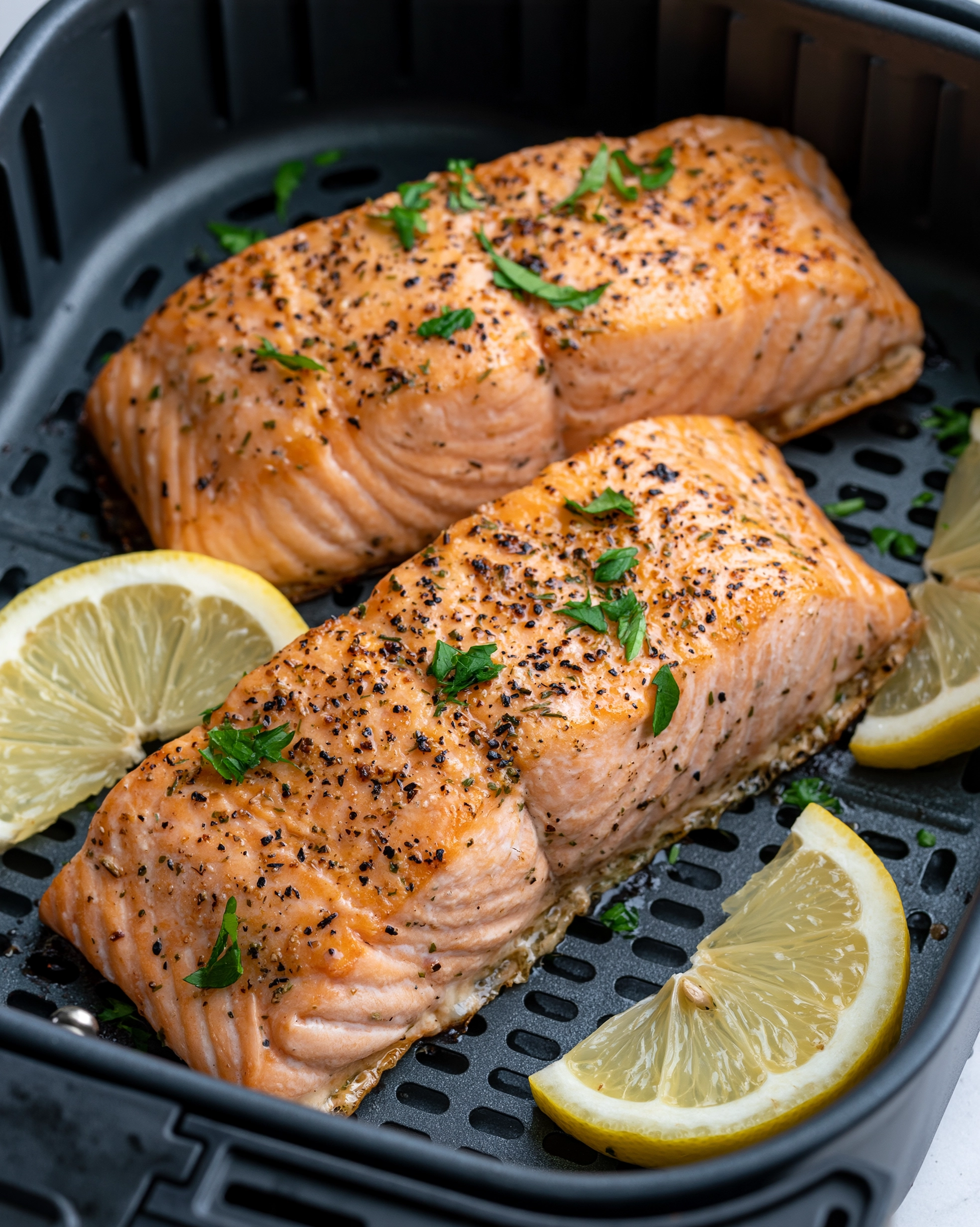
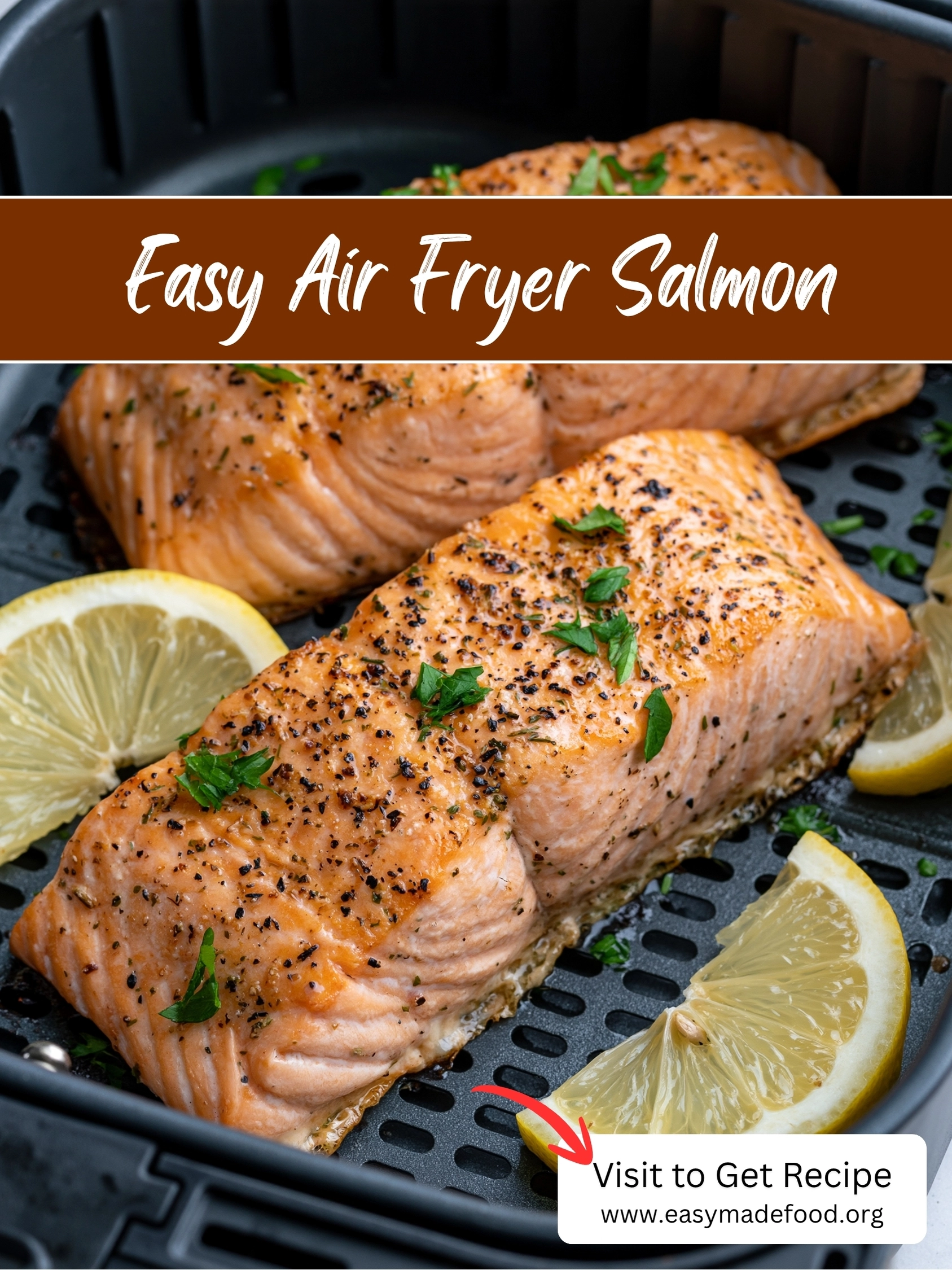
Dry, chalky salmon is the reason so many people think they “don’t like fish.” This air fryer salmon is the opposite of that — flaky, buttery, and juicy in the middle, with a golden, seasoned crust on top that looks exactly like the photo. And it happens in about 8 minutes, with no pan to scrub and no fishy smell taking over your kitchen for two days.
Here is the secret most recipes skip: salmon does not need a marinade, a sauce, or an hour of your evening. It needs two things — a completely dry surface so the seasoning turns into a crust instead of steaming off, and a confident hand with the timer. The air fryer’s hot, fast air does the rest, crisping the top while the center stays silky. Once you learn this timing, you will never bake a sad, overcooked fillet again.
Why This Salmon Beats the Stovetop Every Time
- Ready in 13 minutes total — 5 minutes of prep, about 8 minutes of cooking. Faster than takeout, healthier too.
- Flaky and juicy, never dry — the hot circulating air cooks the outside fast and seals in the moisture.
- That golden crust — a simple garlic-herb rub with a pinch of brown sugar gives you the caramelized, speckled top in the photo.
- No flipping, no fuss — the fillets go in skin-side down and come out perfect. You never touch them.
- Easy cleanup — one basket, no splattered stovetop, no lingering frying smell.
The Ingredients (Simple Rub, Big Flavor)
- 4 salmon fillets (about 6 oz / 170 g each), skin-on, roughly 1 inch thick — skin-on fillets are best here. The skin protects the flesh from the heat, keeps the fish juicy, and crisps up beautifully against the basket. Try to pick fillets of similar thickness so they finish at the same time.
- 1 tablespoon olive oil — helps the rub stick and encourages that glossy, golden top. Avocado oil works too.
- 1 teaspoon garlic powder — garlic flavor without the burning risk of fresh garlic under high heat.
- 1 teaspoon paprika — sweet paprika for color and gentle warmth; smoked paprika if you like a hint of smoke.
- 1 teaspoon Italian seasoning — the little green herb flecks you can see all over the fillets in the photo.
- 1 teaspoon light brown sugar — the quiet star of the rub. It melts and caramelizes in the hot air, giving the tops their deep golden, slightly crisp finish. You will not taste sweetness — just richness.
- 3/4 teaspoon kosher salt — if you use fine table salt, cut it to 1/2 teaspoon.
- 1/2 teaspoon coarse black pepper — coarse grind, like the bold speckles in the photo.
- 1 tablespoon fresh parsley, finely chopped — for the bright green finish.
- 1 lemon, cut into wedges — for serving. A squeeze of lemon at the table wakes up every bite.
How to Make It: Season, Air Fry, Done
- Bring the salmon out early. Take the fillets out of the fridge 10 to 15 minutes before cooking. Fish that starts closer to room temperature cooks more evenly, so the center is perfect when the top is golden.
- Pat it really dry. Use paper towels and pat the top and sides of each fillet until they feel dry to the touch. This is the single most important step — a wet surface steams, a dry surface crusts.
- Mix the rub. In a small bowl, stir together the garlic powder, paprika, Italian seasoning, brown sugar, salt, and black pepper.
- Oil and season. Brush or rub the olive oil over the top and sides of each fillet (not the skin). Sprinkle the rub generously over the top and sides and press it in gently with your fingers so it sticks in an even layer.
- Preheat the air fryer. Run it at 400°F (200°C) for 3 minutes. A hot basket means the skin starts crisping the second it lands instead of sticking.
- Arrange the fillets. Place the salmon in the basket skin-side down, in a single layer, with a little space between each fillet so the air can flow. If your air fryer is small, cook in two batches rather than crowding — crowded fish steams.
- Air fry — and do not flip. Cook at 400°F (200°C) for 7 to 9 minutes, depending on thickness. A 1-inch fillet is usually perfect at 8 minutes. There is no flipping: the skin crisps against the basket while the seasoned top turns golden, just like the photo.
- Check for doneness. Press the thickest part gently with a fork — the flesh should separate into clean flakes and the very center should look moist and just barely translucent for a medium finish. For a thermometer check, see the guide in the tips below. If it needs more time, give it 1 to 2 minutes more and check again.
- Rest and serve. Let the salmon rest in the basket (or on a warm plate) for 2 to 3 minutes — carryover heat finishes the center without drying it. Shower with fresh parsley, and serve with lemon wedges right in the basket for that photo finish.
Sofia’s Expert Tips (Flaky Fish, Every Single Time)
- Read the temperatures like a chef, not a clock. The FDA recommends cooking salmon to 145°F (63°C) in the thickest part — at that point it is fully cooked, firm, and opaque. Many chefs and home cooks prefer a medium finish around 125–130°F (52–54°C), where the center is silky, deep pink, and melt-in-your-mouth moist. Both are honest choices: pick the texture your family loves. My trick? Pull the salmon out 5°F before your target and let it rest — carryover heat will carry it the rest of the way.
- The flake test never lies. Slide a fork into the thickest part and twist gently. Done salmon separates into glossy flakes with almost no resistance. If it feels rubbery and tight, it needs another minute. If the flakes fall apart dry and pale, it went too far — shave 1 to 2 minutes off next time and check earlier.
- Dry skin, crisp skin. If you love eating the crispy skin, make sure the skin side is patted extra dry and the basket is preheated. A whisper-thin film of oil on the basket grate also helps it release cleanly.
- Same size, same timing. Fillets of uneven thickness are the top reason one piece is perfect and another is overdone. At the store, ask for center-cut fillets — they are the most even. A much thinner tail piece needs 2 to 3 minutes less.
- Leave it alone in there. No flipping, no peeking every minute. Every time you open the basket, the temperature drops and the crust suffers. Check once, near the end.
- About that white stuff. Sometimes a little white protein (called albumin) bubbles up on the surface — it is harmless and totally normal, and it usually means the fish cooked a touch fast or a touch long. Patting the salmon dry and not overcooking keeps it to a minimum. It wipes right off before serving if you like.
Easy Variations Worth Trying
- Garlic butter finish: melt 2 tablespoons of butter with 1 small grated garlic clove and a squeeze of lemon, and spoon it over the hot fillets right before serving. Rich, classic, restaurant-style.
- Honey Dijon: whisk 1 tablespoon honey with 1 tablespoon Dijon mustard and brush it over the tops instead of the dry rub in the last 3 minutes of cooking for a glossy, tangy glaze.
- Cajun kick: swap the rub for 2 teaspoons Cajun seasoning plus the brown sugar and salt. Smoky, spicy, and wonderful in fish tacos.
- Everything bagel: skip the rub and press 1 tablespoon of everything bagel seasoning onto the oiled tops. Crunchy, garlicky, and fun over a salad.
How to Store, Freeze and Reheat It
- Fridge: cool leftovers completely, then store in an airtight container for up to 2 days. Honestly, salmon is at its best fresh, so plan to enjoy leftovers the next day — flaked over a salad or into pasta, it rarely needs reheating at all.
- Reheat gently — this is where most people ruin it. Warm the air fryer to 300°F (150°C) and reheat the fillets for 3 to 4 minutes, just until warmed through. Low and slow wins: blasting leftover salmon at high heat is what makes it dry and fishy. A low oven (275°F / 135°C for about 10 minutes) works too.
- Freezer (the honest note): cooked salmon can be frozen for up to 2 months, well wrapped, but the texture turns a little softer and drier after thawing — it is better used flaked into patties, pasta, or a salmon salad than served as a star fillet. Raw salmon freezes far better: freeze uncooked fillets for up to 3 months, thaw overnight in the fridge, then cook fresh.
Frequently Asked Questions
Skin-side down, always, for this recipe. The skin acts like a shield between the delicate flesh and the hot basket, keeping the fish juicy, and it crisps up as it cooks. Skin-up can give a crispier skin in some models, but the seasoned top would face down into the grate and the fish is much easier to overcook. Down is easier, safer, and it is how the fillets in the photo were cooked.
Yes. Run the frozen fillets at 390°F (200°C) for about 7 minutes first, just until the surface softens. Then brush with oil, add the rub, and cook 5 to 7 minutes more, until the thickest part flakes easily and reaches your preferred temperature. Fresh or fully thawed salmon gives the best crust, but frozen works well on a busy night — no thawing, no problem.
It is called albumin — a natural protein in the fish that gets pushed to the surface as the flesh tightens during cooking. It is completely harmless and tasteless. You tend to see more of it when salmon cooks quickly or slightly past done. Patting the fish dry, not overcrowding the basket, and pulling the salmon a few degrees early keeps it to a minimum.
Use the flake test: press a fork into the thickest part and twist gently. The flesh should separate into moist, glossy flakes and the very center should still look slightly deep pink and translucent for a medium finish, or fully opaque if you prefer it well done. If it resists and feels firm and rubbery, give it another minute and test again.
After — if at all. Cooking with the skin on keeps the fillet moist and holds it together. After cooking, the fillet slides right off the skin with a spatula if you do not want to eat it. But try it first: properly crisped air fryer skin is salty, crunchy, and honestly one of the best bites.
Easy Air Fryer Salmon Recipe
Course: DinnerCuisine: AmericanDifficulty: Easy4
fillets5
minutes8
minutes13
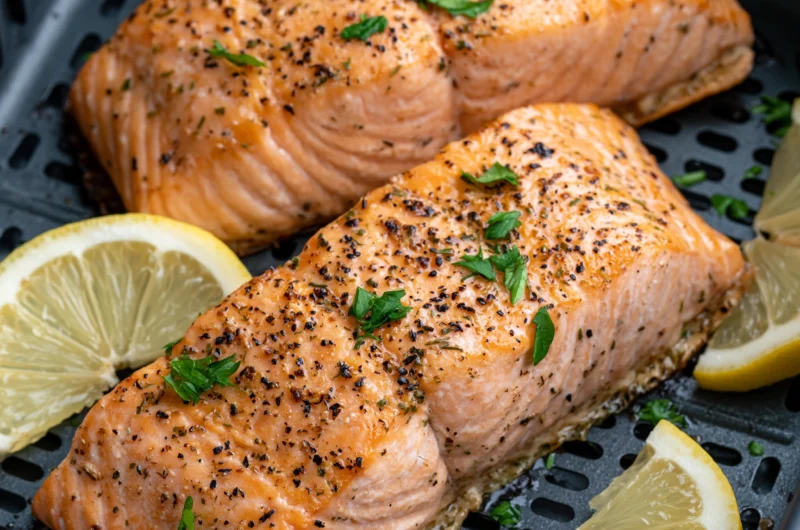
minutesFlaky, juicy salmon fillets with a golden garlic-herb crust, cooked skin-side down in the air fryer in about 8 minutes. Finished with fresh parsley and lemon — a healthy weeknight dinner that tastes restaurant-made.
Ingredients
4 salmon fillets (about 6 oz / 170 g each), skin-on
1 tablespoon olive oil
1 teaspoon garlic powder
1 teaspoon paprika
1 teaspoon Italian seasoning
1 teaspoon light brown sugar
3/4 teaspoon kosher salt
1/2 teaspoon coarse black pepper
1 tablespoon fresh parsley, finely chopped
1 lemon, cut into wedges, for serving
Directions
- Take the salmon out of the fridge 10 to 15 minutes early and pat the fillets very dry with paper towels.
- Stir the garlic powder, paprika, Italian seasoning, brown sugar, salt, and black pepper together. Rub the oil over the top and sides of each fillet, then press the rub on evenly.
- Preheat the air fryer to 400°F (200°C) for 3 minutes. Place the fillets skin-side down in a single layer with space between them.
- Air fry for 7 to 9 minutes (about 8 for 1-inch fillets) without flipping, until the flesh flakes easily and the center is moist — 145°F (63°C) for well done, or 125–130°F (52–54°C) for a silky medium.
- Rest 2 to 3 minutes, shower with fresh parsley, and serve with lemon wedges.
Notes
- Pat the salmon very dry before seasoning — this is the key to the crust. Pull the fillets 5°F before your target temperature and rest 2 to 3 minutes; carryover heat finishes them. FDA recommends 145°F (63°C); for a silky medium center, aim for 125–130°F (52–54°C). Cook in batches if needed — never crowd the basket.
Save this recipe for the next busy weeknight — 13 minutes from fridge to plate, and dinner tastes like you tried much harder than you did.
More recipes you’ll love:Easy Air Fryer Chicken Recipe, Easy Broccoli Casserole Recipe and Easy Garlic Bread Recipe.




One Comment